Vole Lawn & Yard Damage
Stopped Before the Snow Hides It Again
The cruelest thing about voles in Central Oregon is that you don't watch the damage happen. It happens under the snow — all winter — and the melt reveals it all at once: a lawn carved into trenches, ornamental beds tunneled hollow, and young trees girdled at the base. Network yard specialists trap the colony at the runway level and armor the root systems voles target next.
- ✓ Runway-level trapping programs — low-profile, pet-safe trap systems set directly in active vole traffic
- ✓ Root-system protection — physical guards for the trees, shrubs, and beds voles girdle under snow cover
- ✓ Seasonal timing that works — fall knockdown before snowfall, spring follow-up at the melt
Request Local Inspection
We match you with a rodent specialist in Bend. Pronto! 🐭
Answered by a real person. Describe the rodent activity you're seeing or hearing and we'll match you with the right specialist!
A Winter of Damage, Revealed in One Spring Morning
An irrigated lawn in the high desert is an oasis — the richest, densest forage for a quarter mile in any direction. Montane and meadow voles spend the summer breeding in that bounty, mostly unseen. Then the snow comes, and everything changes in their favor: the blanket of snow creates the subnivean zone, an insulated, predator-proof workspace between snowpack and turf where voles feed 24 hours a day, all season long.
Under that cover they chew travel routes straight through the grass crown — the distinctive 1–2 inch surface runways that appear at snowmelt like a map of everything they did while you couldn't see them. They strip bark from the base of young trees and ornamental shrubs (girdling — often fatal by the time you spot it), excavate bulbs, and gnaw the roots of junipers, spireas, and arborvitae from below.
Bend's vole pressure also runs in boom cycles — populations can multiply tenfold in a wet summer. A lawn that lost a few strips last spring can lose most of its turf crown the next, especially on properties bordering open meadow, canal easements, and pasture in Tumalo, Sunriver, and east Bend.
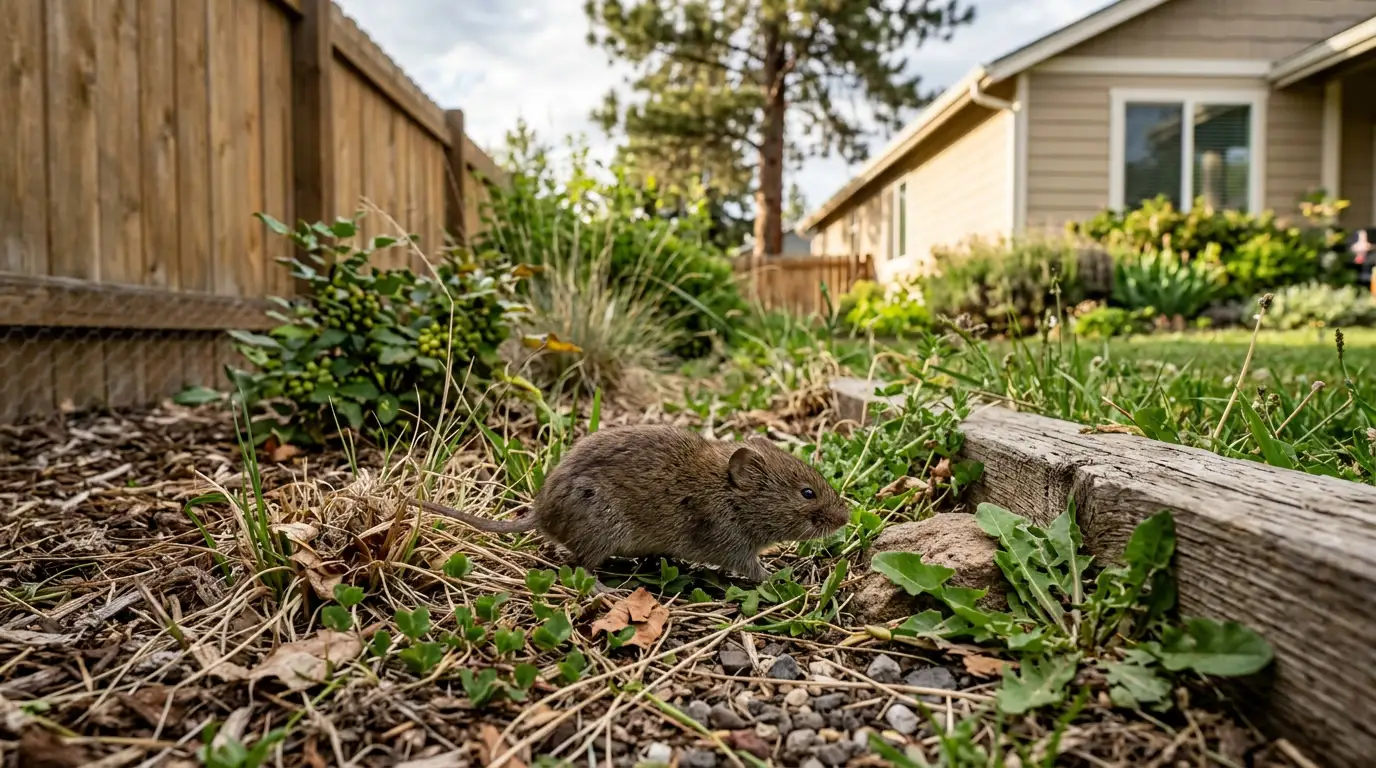
Vole Damage Signatures
- Winding 1–2" runways pressed into turf, visible at melt
- Golf-ball-size burrow openings with no soil mound
- Bark gnawed in a ring at the base of trees and shrubs
- Tulip and crocus beds that simply never come up
- Spongy turf and dead strips that lift away like carpet
Turf, Ornamentals, Roots: Three Fronts, One Winter
High-desert landscaping is expensive to establish and slow to recover — which is exactly why vole damage costs Bend homeowners so much more than the same acreage would in a wetter climate.
High-Desert Turf
Runways sever the grass crown — the growth point — so damaged strips don't green up, they die. At Bend's elevation, cool-season turf gets one short window to recover before summer heat; a bad vole winter can mean re-sodding by July.
Ornamental Landscaping
Bark mulch and landscape fabric — standard in Central Oregon beds — are vole cover, not vole barriers. Colonies tunnel beneath the fabric and work an entire bed of bulbs, perennial crowns, and shrub roots without surfacing once.
Tree & Shrub Root Systems
Under snow, voles girdle young aspens, fruit trees, and ornamental maples at the soil line and gnaw feeder roots below it. A girdled tree often leafs out one last time on stored energy — then collapses in mid-summer, long after the culprit is gone.
Seasonal Subsurface Trapping + Root Armor
Broadcast baiting a yard poisons the food chain that eats voles for free — owls, hawks, and the neighborhood fox — and does nothing for next winter. Network yard specialists run a two-season program built on trapping pressure and physical protection.
Runway Mapping
Every program starts with a property walk that flags active runways, burrow openings, and junction points — plus the harborage feeding the pressure: meadow edges, canal banks, woodpiles, and overgrown fence lines.
Fall Knockdown — Before the Snow
The highest-leverage trapping window is October–November: cutting the colony down before snow cover hands voles three protected months. Low-profile and subsurface trap systems run on check cycles until captures drop to zero.
Root-System Protection
Hardware-cloth trunk guards on young trees, buried mesh collars around prized shrubs and bulb beds, and gravel barriers at planting pockets — installed before snowfall, so the subnivean zone has nothing soft to chew.
Spring Melt Follow-Up
At snowmelt, the revealed runway map is re-surveyed: surviving activity gets targeted re-trapping, habitat fixes are dialed in (mulch pullback, mowing height, fence-line clearing), and turf repair can start on ground that's actually clear.
Often Paired With Vole Work
Pocket Gophers
Mounds instead of runways? That's the other subsurface pest — and a different trapping protocol.
Learn More →House Mice
Heavy yard rodent pressure usually means structural pressure too — the same freeze sends mice indoors.
Learn More →Commercial Management
HOA common areas, golf turf, and resort grounds — documented seasonal vole programs at property scale.
Learn More →Trap the Colony Before the First Snow Covers It.
Our referral line is answered by a human in Bend — 24/7. We'll connect you with the right local expert for your situation.