Pocket Gopher Control
Built for Central Oregon's Volcanic Soil
Central Oregon sits on pumice and volcanic ash — soil a pocket gopher moves through like water. One animal can throw up a dozen crescent-shaped mounds a week, mine hundreds of feet of tunnel under your lawn or pasture, and chew through buried drip line you won't know is gone until the junipers start dying. Network specialists end it underground, where the gopher actually lives: probe, open the main tunnel, trap, verify.
- ✓ 100% poison-free underground trapping — no burrow fumigants or toxic baits near pets, wells, or livestock
- ✓ Perimeter trapping zones — standing interception lines that stop reinvasion from neighboring fields
- ✓ Irrigation protection — buried drip and sprinkler runs flagged, inspected, and shielded where gophers cross them
Request Local Inspection
We match you with a rodent specialist in Bend. Pronto! 🐭
Answered by a real person. Describe the rodent activity you're seeing or hearing and we'll match you with the right specialist!
Pumice Soil Is a Gopher Superhighway
The same volcanic geology that gives Central Oregon its fast-draining, easy-working soil gives the northern pocket gopher the easiest digging in the state. In Willamette Valley clay, a gopher fights for every foot of tunnel. In Bend's pumice and ash, it excavates 200 to 300 feet of new tunnel in a single night — which is why one gopher here produces mound damage that looks like a family of them.
The calling card is unmistakable once you know it: a crescent or fan-shaped mound of fresh, sifted soil with a plugged exit hole offset to one side — pushed up from a lateral tunnel angling back down to the main runway 6 to 12 inches below. New mounds appearing in a line trace the main tunnel's path across your lawn or pasture. (A perfectly round mound with a center hole isn't a gopher — and an open runway with no mound at all is a vole. Treating the wrong pest wastes a season.)
Gophers stay active all year in our soils — they don't hibernate, they just dig deeper in winter. Properties on irrigated ground take the heaviest pressure: pastures and small acreage in Tumalo and Alfalfa, lawns backing the canal network, and any Bend yard where consistent moisture grows the roots gophers feed on from below.
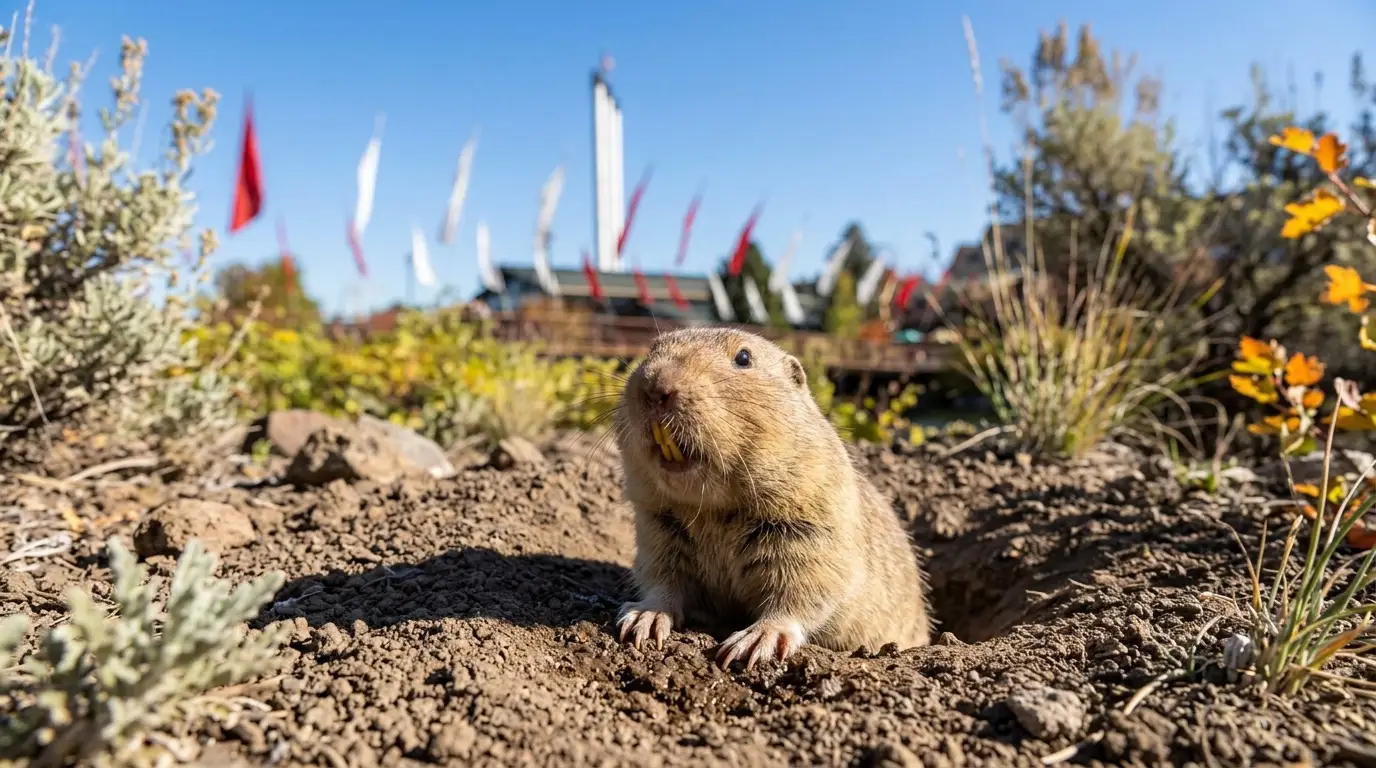
Gopher Damage Signatures
- Crescent/fan-shaped mounds of fine, sifted soil
- Plugged exit hole offset to one edge of the mound
- Fresh mounds appearing in a rough line across the yard
- Plants wilting or pulled downward into the soil
- Sudden pressure loss in buried drip irrigation zones
- Soft, collapsing strips where shallow tunnels run
Lawns, Pastures & the Irrigation That Keeps Them Alive
In the high desert, everything green depends on water you put in the ground — and the gopher's tunnel network runs straight through all of it.
Bend Lawns
Each mound smothers the turf beneath it, the bare soil seeds weeds, and shallow feeder tunnels leave strips that sink underfoot and scalp under the mower. A single resident gopher can put twenty mounds on a quarter-acre lawn in a month.
Pastures & Small Acreage
On Tumalo and Alfalfa horse properties, mounds dull swather blades, rock haying equipment, and create leg-injury hazards for stock. Gophers also strip alfalfa and pasture-grass roots from below — yield losses on infested ground routinely hit 20–30%.
Buried Irrigation Systems
Gophers gnaw poly drip line, chew through funny pipe, and tunnel along sprinkler laterals — the moist, root-lined trench is their favorite route. The leak runs invisibly underground until a zone loses pressure or a soggy sinkhole appears, often mid-summer when repairs hurt most.
Poison-Free Underground Perimeter Trapping
Burrow fumigants and strychnine baits are blunt instruments — dangerous around wells, dogs that dig, and the owls and badgers that hunt gophers for free. Network specialists work the tunnel system directly, the way professional orchard and turf managers have for a century.
Probe & Map the Main Runway
Fresh mounds give away the lateral tunnels; a soil probe finds the main runway between them — the gopher's daily commute, 6 to 12 inches down. Every set goes on that line, not in the mound, which is why amateur mound-trapping fails.
Paired Deep-Tunnel Sets
The runway is opened surgically and fitted with two traps facing opposite directions — a gopher patrols its tunnels obsessively and reaches the set within hours. Sets are staked, flagged, and re-covered so pets and mowers never meet them.
Perimeter Interception Zones
Clearing your ground is half the job; pumice soil refills fast from neighboring fields and canal banks. Standing trap zones along the property's pressure edges — fence lines, ditch margins, open-field boundaries — intercept immigrants before they re-establish.
Verification & Mound Repair
Cleared tunnels are test-opened: an active gopher re-plugs an opened tunnel within a day, so a hole that stays open is proof the line is clear. Mounds are then raked out, irrigation runs are pressure-checked, and chewed line is flagged for repair.
Often Paired With Gopher Work
Voles
Surface runways with no mounds? That's the other yard pest — and it needs a different program.
Learn More →Commercial Management
Golf turf, sports fields, HOA commons, and working pasture — gopher programs at acreage scale.
Learn More →House Mice
Heavy ground-rodent pressure outside usually means entry pressure on the house when the freeze hits.
Learn More →Every New Mound Is Another 50 Feet of Tunnel.
Our referral line is answered by a human in Bend — 24/7. We'll connect you with the right local expert for your situation.