
Contaminated Insulation Removal
Because the Rodents Left Something Behind
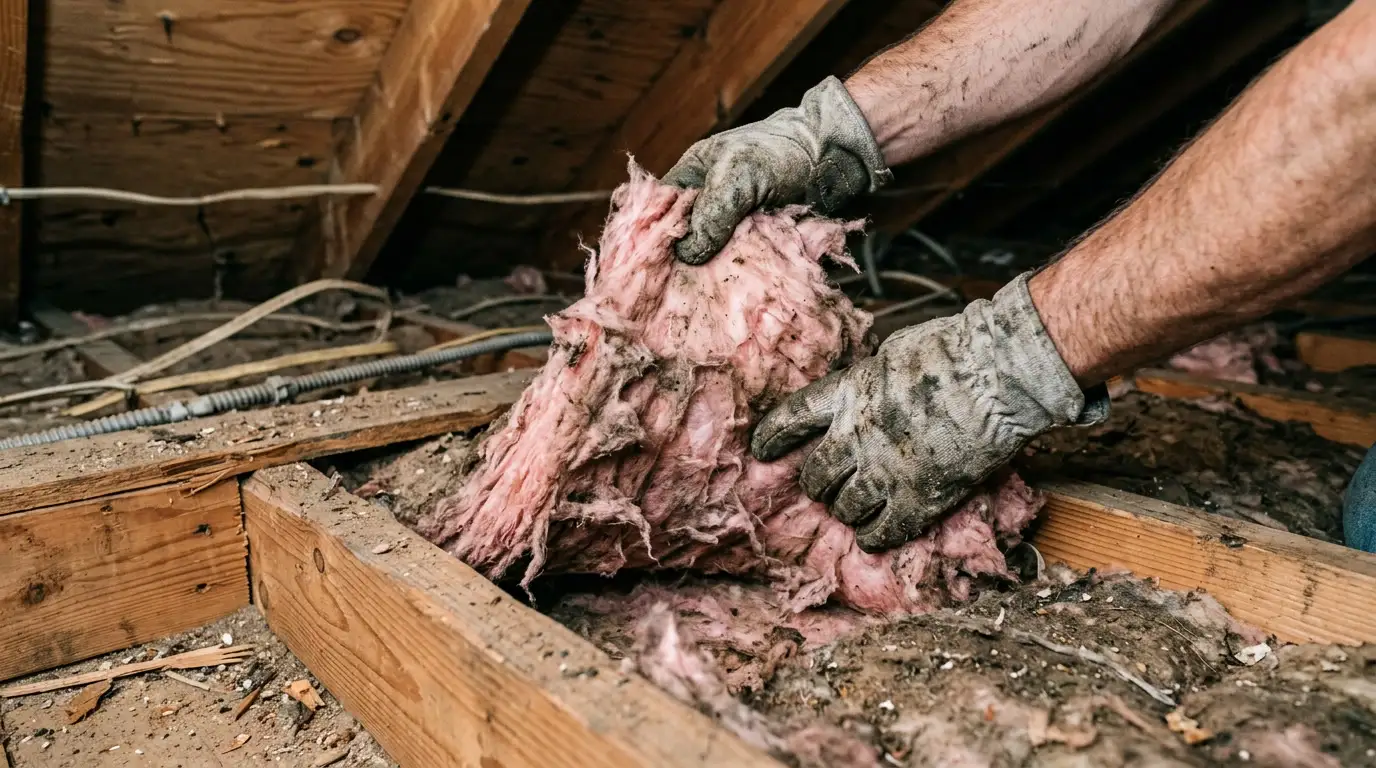
When an infestation ends, the contamination doesn't. A season of rodent occupation leaves attic and crawl space insulation soaked with urine, seeded with droppings, and laced with nesting debris — sitting directly above your ceilings or under your floors, in the airstream your furnace pulls from. Network sanitization crews remove all of it under full containment with HEPA-vacuum systems, and hand the space back bare, decontaminated, and ready to re-insulate.
- ✓ Hantavirus-protocol handling — wet-method suppression, full PPE, sealed containment; never dry sweeping
- ✓ Commercial HEPA-vacuum extraction — contaminated material leaves through a sealed hose, not through your hallway
- ✓ Re-insulated to current code — most Bend homes come back better than they were built
Request Local Inspection
We match you with a rodent specialist in Bend. Pronto! 🐭
Answered by a real person. Describe the rodent activity you're seeing or hearing and we'll match you with the right specialist!
Soiled Insulation Doesn't Age Out. It Has to Come Out.
The health problem is real and local. Central Oregon's deer mice are a known carrier of hantavirus, which spreads through dried urine and droppings that aerosolize when disturbed — which is exactly what happens every time wind washes through a vented crawl space, or a furnace blower kicks on near a leaky return duct, or a homeowner climbs up to "just sweep it out." That last one is how most exposure happens, and it's why this is professional work. Add the ammonia load of urine-soaked fiberglass, allergen-bearing dander and droppings, and the insects that colonize nesting debris, and the material above your bedroom ceiling is a contamination reservoir, not insulation.
The structural problem compounds it. Rodents tunnel galleries through fiberglass and cellulose, compressing and matting it until the rated R-value collapses — a tunneled R-49 attic can perform like R-20 at Bend's winter temperatures, and your heating bill quietly pays the difference. Urine wicks into drywall and framing below, staining ceilings and corroding fasteners. And the scent trails saturating the material are a beacon: to the next generation of mice, a soiled attic smells like home.
That last point is why removal is non-negotiable in a permanent exclusion plan. Seal the structure but leave scented insulation inside, and every gap that ever re-opens gets found immediately. Clean material behind sealed steel is what "permanent" actually means.
Signs Your Insulation Is Contaminated
- Persistent ammonia or musk odor, worse on warm days
- Visible droppings, tunnels, or matted paths in the material
- Yellow-brown staining on insulation, drywall, or vapor barrier
- Unexplained allergy or asthma flare-ups indoors
- Rising heating bills after a known infestation
- Any infestation that ran longer than one season
Do Not Disturb It Yourself
Sweeping, shop-vacuuming, or bagging contaminated insulation without containment aerosolizes the very particles that carry hantavirus. If you suspect contamination, stay out of the space and call the referral line.
Your Home Is Treated Like the Contaminated Site It Is
The difference between a sanitization crew and a guy with a shop vac is everything that happens before the first bag is filled. Network crews work to OSHA respiratory standards and Oregon Health Authority hantavirus guidance on every residential job, no exceptions.
Sealed Containment Zone
The attic hatch or crawl access is tented with poly sheeting and zippered entry; the work zone is isolated from the living space before any material is touched, and HVAC to the area is shut down and registers sealed.
Wet-Method Suppression
Droppings, nests, and heavily soiled patches are misted with disinfectant and allowed dwell time before handling — the CDC-prescribed method that keeps particles out of the air instead of chasing them after.
Full PPE, Every Entry
Disposable full-body suits, gloves, eye protection, and P100 respirators — donned outside, doffed inside containment, and disposed with the waste. Nothing worn in the contaminated space leaves it uncovered.
HEPA Extraction, Start to Bare Deck
A typical Bend attic or crawl space takes one to two days from containment to handoff. Every stage is documented with photos for your records and your insurer.
Assessment & Containment
Contamination is mapped and photographed, the work zone is sealed, HVAC is isolated, and the HEPA vacuum is staged outside with its hose run through a sealed port — so material never travels through the house.
HEPA-Vacuum Extraction
Blown-in cellulose and loose fiberglass are extracted by commercial HEPA-filtered vacuum directly into sealed exterior collection bags. Batt insulation is wet-misted, rolled, and double-bagged inside containment before it moves.
Debris & Nest Clearing
Nests, cached food, droppings concentrations, and damaged vapor barrier come out with the insulation. Joist bays and the attic deck are detail-vacuumed down to clean wood.
Surface Decontamination
Framing, decking, and top plates are treated with hospital-grade antimicrobial and enzyme deodorizer — killing pathogens and erasing the scent trails that recruit the next infestation. Heavy staining is sealed with an odor-blocking primer.
Exclusion Checkpoint
With the space bare, every entry point is visible. The exclusion specialist seals or verifies the envelope now — crawl space or roofline — because re-insulating an unsealed space is paying twice.
Re-Insulation to Code
Fresh insulation installed to current Oregon energy code — R-49 attics, R-30 floors — typically a meaningful upgrade over what a Bend home was built with, and one your heating bill notices the first winter.
Often Paired With Insulation Removal
Sanitization
Full-space decontamination and deodorizing — the treatment stage, available standalone for lighter contamination.
Learn More →Crawl Space Exclusion
Seal the envelope while the space is bare — the exclusion checkpoint made permanent in steel.
Learn More →Attic & Roofline Sealing
Close the climbing routes overhead before the fresh R-49 goes down.
Learn More →Smell It Through the Registers? Don't Climb Up There.
Our referral line is answered by a human in Bend — 24/7. We'll connect you with the right local expert for your situation.