Commercial Rodent Management
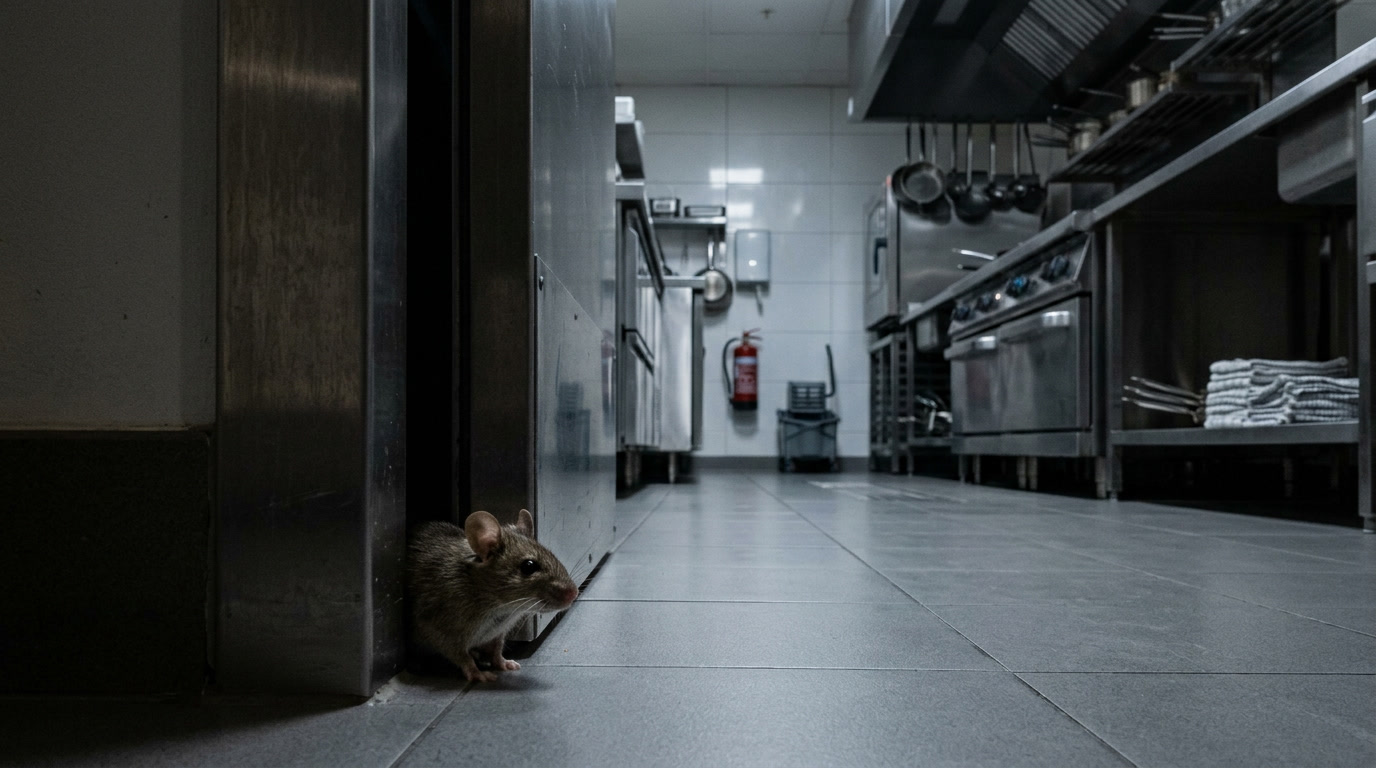
One Mouse Can Close a Kitchen. Or a Brewery.
A health inspector doesn't grade on effort, and a one-star review about a mouse doesn't mention your response time. For Bend's restaurants, breweries, and commercial facilities, network specialists run discreet, documented monitoring programs — exclusion-first, audit-ready, and serviced on a schedule your customers never notice.
- ✓ Monthly or quarterly service contracts — scheduled monitoring, scaled to your facility's pressure and audit requirements
- ✓ Health-inspection-ready documentation — station logs, trend reports, and corrective records in a binder and in the cloud
- ✓ Discreet by design — unmarked vehicles, off-hours service windows, and technicians who know not to walk through a full dining room
Request Local Inspection
We match you with a rodent specialist in Bend. Pronto! 🐭
Answered by a real person. Describe the rodent activity you're seeing or hearing and we'll match you with the right specialist!
High Rodent Pressure Meets High Stakes
Downtown and Old Mill restaurants operate in connected building blocks with shared walls, shared dumpster corrals, and century-old utility chases — when the neighbor has mice, you have mice on a delay. Bend's breweries add a layer the inspectors watch closely: spent grain handling, warm fermentation rooms, and loading docks that cycle pallets in from rodent-active warehouses daily.
Commercial storage facilities on the east side and along Highway 97 face the opposite problem — hundreds of unsupervised units, customer-stored food and fabric, and direct exposure to open sagebrush land where the winter migration starts. One infested unit becomes a building-wide claim event in a season.
The common thread: a rodent sighting at a business isn't a maintenance issue, it's a compliance event, a reputation event, and — at audit time — a paperwork event. Commercial programs are built around all three.
Facilities on Network Programs
- Restaurants, cafés & food carts with commissary kitchens
- Breweries, distilleries & tasting rooms
- Self-storage & warehouse facilities
- Grocery, retail & food processing
- Property management portfolios & HOA commons
- Medical, dental & childcare facilities
When the Inspector Asks, the Binder Answers
Deschutes County health inspections, ODA food safety audits, third-party certifications for wholesale accounts — they all ask the same questions: where are your monitoring points, when were they last serviced, and what did you do about activity? Network commercial programs are structured so the answer is always on paper before anyone asks.
Mapped Station Network
Every exterior bait station and interior trap point is numbered and plotted on a site diagram posted in your logbook — exactly the format health and audit inspectors expect to see.
Service Logs & Trend Reports
Each visit is logged — station by station, with activity levels, bait consumption, and corrective actions — and rolled into quarterly trend reports that show pressure rising before it becomes a sighting.
Exclusion-First, Bait Where It Belongs
The network standard holds for businesses too: structural exclusion does the permanent work. Tamper-resistant rodenticide stations are an exterior perimeter tool — locked, anchored, away from non-targets — never an interior crutch for an unsealed building.
Discreet Service Windows
Unmarked vehicles, plain uniforms, and service scheduled before open, after close, or on dark days. Your customers see a clean restaurant — never a pest control visit.
How a Commercial Program Runs
Every contract starts with the building, not the bait. Monitoring frequency — monthly for food service and high-pressure sites, quarterly for lower-risk facilities — is set by the initial audit and adjusted by the data.
Initial Exclusion Audit
The full facility is inspected like a residential exclusion job at commercial scale: dock doors and levelers, kitchen wall penetrations, roofline and mechanical penthouses, shared-wall chases. Structural fixes are scoped and priced first — they shrink the monitoring program forever.
Critical-Point Hardening
Steel door sweeps on every exterior and kitchen door, sealed penetrations behind cook lines and bars, dock brush seals, and rodent mesh on rooftop equipment — the commercial kitchen exclusion package that turns inspection findings into closed items.
Perimeter & Interior Network
Tamper-resistant bait stations anchored on the exterior perimeter and dumpster corral; trap-based monitoring points inside — food areas stay rodenticide-free, per code and per common sense.
Scheduled Service & Reporting
Monthly or quarterly visits on your service window: every station checked, cleared, re-baited or re-set, and logged digitally on the spot. You get the report by email before the technician leaves the lot; the logbook copy is already in the binder.
Escalation Response
Activity spike between visits? Contract clients get priority same-day dispatch through the referral line — interior trapping, the entry traced and sealed, and the incident documented for your records, not your review page.
Often Paired With Commercial Programs
Emergency Trapping
Sighting during service hours? Priority same-day dispatch for contract clients.
Learn More →Sanitization
Post-incident decontamination with the documentation your insurer and inspector both want.
Learn More →Attic & Roofline Sealing
Rooftop units and mechanical penthouses are commercial buildings' most-missed entries.
Learn More →Your Next Inspection Is Already Scheduled. Be Ready for It.
Our referral line is answered by a human in Bend — 24/7. We'll connect you with the right commercial specialist for your facility.